
Latest Products


Contact Us
- No.30-8, Cha Village, Chaling Village, Xukou Town, Fuyang District, Hangzhou City, Zhejiang Province
- Todd.jin@abp-airpopmould.com
- +86 138 1919 8875

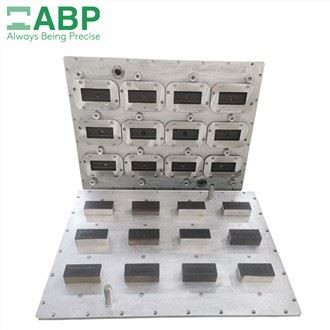
EPS Fish Box Mould
EPS fish box mold is made of high-quality aluminum alloy material, designed for optimal storage and transportation of fresh seafood. EPS fish box It is made of high-grade expanded polystyrene (EPS) material for storing fish. Ensures a lightweight yet sturdy structure, maintains temperature integrity to preserve the freshness of fish. Customizable and reliable, it is an ideal choice for seafood industry professionals looking for efficient packaging solutions.
Description
HANGZHOU ABP INDUSTRY CO.,LTD
HANGZHOU ABP INDUSTRY CO.,LTD is a manufacturer in China carrying out EPS and EPP mould production. The company provides service to domestic and overseas in mould, with its wide and comprehensive operation field, technological machinery, detailed and functional operation equipment and experienced personnel.
Why Choose Us
Excellent product quality
Our molds are characterized by high efficiency, excellent stability and low power consumption. Enjoying a good reputation all over the world and obtaining ISO 9001 quality certification in accordance with European Community standards (CE).
Advanced equipment
The company provides service to domestic and overseas in moulds, with its wide and comprehensive operation field, technological machinery, detailed and functional operation equipment and experienced personnel.
Rich experience in production
With more than 30 years of manufacturing experience, it has become one of the most famous EPS/EPP mold manufacturers. ABP always keeps developing to keep up with the world changes and meet the requirements of its field.
After-sales service
Persisting to the principle of "Always Being Precise Professional Passionate ", we'll strive for high efficiency, passion, integrity to provide customers with superior products and services.

EPS ice cream sphere box mold is made by high-quality aluminum alloy. With standard steam chamber and standard cooling system. All the mould covered with T-Fluorine coating paint protection membrane to make the mould lubricative and can avoiding the products sticking to the mold.

Height Adjustable EPS Waffle Pod Mould
High quality Height changeable EPS/AIRPOP Waffle Pod mould for FANGYUAN machine export to New Zealand. All the mould covered with T-Fluorine coating paint protection membrane to make the mould lubricative and can avoiding the products sticking to the mold.

Full CNC process EPS special foam/Styrofoam 20L box mould for Hirsch machine export to Dominican. With standard steam chamber and standard cooling system. Convenient mold unloading. Good corrosion resistance.

Full CNC process High quality EPS expanded polystyrene pot package mould export to Kuwait. EPS pot package mould is made by high-quality aluminum alloy. 350 degree heat resistance and long life using.

Full CNC process EPS expander polystyrene Round Ice Box mould export to Kuwait. With standard steam chamber and standard cooling system. Convenient mold unloading. Good corrosion resistance.

Full CNC process EPS seed tray mould export to Kuwait. All the mould covered with T-Fluorine coating paint protection membrane to make the mould lubricative and can avoiding the products sticking to the mold.

EPS Television TV Package Mould
Full CNC process EPS back RT RC(Whirlpool) mould export to Mexico. EPS television TV package mould is made by high-quality aluminum alloy. 350 degree heat resistance and long life using.
EPS Washing Machine Package Mould
Full CNC process EPS Back LT RC (Whirlpool) mould export to Mexico. All the mould covered with T-Fluorine coating paint protection membrane to make the mould lubricative and can avoiding the products sticking to the mold.

Full CNC EPS air pop diamond pod mould for Building export to Australian. With standard steam chamber and standard cooling system. Convenient mold unloading. Good corrosion resistance.
What is EPS Fish Box Mould
EPS fish box mold is made of high-quality aluminum alloy material, designed for optimal storage and transportation of fresh seafood. EPS fish box It is made of high-grade expanded polystyrene (EPS) material for storing fish. Ensures a lightweight yet sturdy structure, maintains temperature integrity to preserve the freshness of fish. Customizable and reliable, it is an ideal choice for seafood industry professionals looking for efficient packaging solutions.
Benefits of EPS Fish Box Mould
Customization
EPS fish box molds allow for customization, enabling you to create boxes of various sizes and shapes tailored to your specific requirements. This customization ensures a perfect fit for your fish products, optimizing storage and transportation efficiency.
Insulation
EPS (Expanded Polystyrene) is renowned for its excellent thermal insulation properties. EPS fish box molds help maintain the desired temperature, keeping your fish fresh during storage and transportation. This insulation is vital for preserving the quality and freshness of the fish, reducing the risk of spoilage.
Lightweight
EPS fish box molds are lightweight yet durable, making them easy to handle and transport. Their lightweight design minimizes shipping costs and facilitates loading and unloading processes, enhancing overall logistics efficiency.
Shock absorption
EPS material offers superior shock absorption, protecting your fish from damage during transit. Whether it's rough handling or sudden impacts, EPS fish box molds cushion the fish, reducing the risk of bruising or breakage.
Hygiene
EPS is inherently hygienic and resistant to moisture, mold, and bacteria growth. EPS fish box molds provide a clean and sanitary environment for storing and transporting fish, ensuring food safety and quality compliance.
Cost-effectiveness
EPS fish box molds are cost-effective compared to alternative materials. Their affordability makes them a budget-friendly choice for businesses looking to optimize packaging costs without compromising on quality or performance.
Recyclability
EPS is recyclable, making fish box molds made from this material an environmentally friendly option. They can be easily recycled and reused, contributing to sustainability efforts and reducing environmental impact.
How Does EPS Fish Box Mould Compare to Plastic Materials?
EPS fish box molds use expanded polystyrene, a lightweight and insulating material that is molded into shape through a steam heating and molding process. This process results in fish boxes that are lightweight yet sturdy, offering good thermal insulation properties ideal for preserving temperature-sensitive goods like fish. In contrast, plastic fish boxes are typically made from various synthetic polymers through injection molding or extrusion processes. While plastics offer durability and flexibility in design, EPS fish box molds are often chosen for their superior insulation, lower weight, and recyclability.
How To Make EPS Fish Box Mould
Design
Start by designing the fish box mold according to your specific requirements. Consider factors such as the size and shape of the fish you'll be storing and any additional features like drainage holes or handles.
Material Selection
Choose high-quality EPS (Expanded Polystyrene) material for making the mold. EPS is lightweight, durable, and offers excellent insulation properties, making it ideal for storing and transporting fish.
Molding Process
Prepare the EPS material by cutting it into the desired shape and size using a hot wire cutter or CNC machine. Ensure precise measurements to achieve a snug fit for the fish.
Assemble the cut pieces of EPS material to form the mold structure. Use adhesive or specialized EPS glue to join the pieces together securely.
Pay attention to details such as smooth edges and tight seals to prevent any leakage or damage to the fish during storage and transportation.
Customization
If needed, customize the mold by adding features such as drainage holes for excess water to escape or slots for inserting dividers to separate different types of fish.
Reinforcement
Consider reinforcing the mold with additional materials such as plastic or metal frames to enhance its durability and structural integrity, especially if it will be subjected to heavy loads or rough handling.
Finishing Touches
Once the mold is assembled and customized, inspect it for any imperfections or gaps. Seal any gaps or cracks using EPS compatible sealants to ensure a watertight seal.
Testing
Before using the mold for storing or transporting fish, conduct thorough testing to ensure that it meets your requirements for insulation, durability, and functionality. Test the mold under simulated conditions to assess its performance and make any necessary adjustments.
What Should be Considered When Designing EPS Fish Box Mould?
Mold cost: The cost of producing molds can increase with the number of cavities. It's essential to strike a balance between production volume and mold cost to achieve cost-effectiveness.
Energy efficiency: Consider the energy required for the molding process. Larger molds with more cavities may require more energy for heating and cooling. but it can be balanced if the customer can reach the maximum quantity and optimize the mold design for energy efficiency.
Strength: Ensure that the EPS fish box mold can withstand the pressure and forces exerted during the molding process. The structural integrity of the mold is crucial for its durability and long lifespan.
Mold lifespan: A well-designed EPS fish box mold should have a long lifespan to maximize its return on investment. Factors such as material selection and proper maintenance contribute to mold longevity.
EPS filling efficiency: Assess how efficiently the EPS bean flows into the mold cavities. Proper channeling and gating designs are essential for smooth and uniform filling. To ensure that every corner is full of material.
Heating Efficiency: Evaluate the heating system to ensure even and efficient heat distribution throughout the mold. This is crucial for consistent EPS fish box mold quality.
Water cooling Efficiency: Efficient water cooling systems are essential to expedite the water cooling process after molding. Effective cooling helps reduce cycle times and improve productivity.
Vacuum cooling efficiency: If vacuum cooling is used, consider the design of the vacuum system to ensure rapid and effective cooling of the EPS foam molded parts.
Demolding efficiency: Design the EPS fish box mold to facilitate the easy and consistent removal of molded EPS boxes from the cavities. Adequate draft angles and location of EPS ejector also need to be well considered.
Preparation: Ensure that the EPS fish box mold is clean and free from any debris or contaminants. Proper sanitation is crucial to maintaining food safety standards.
Placement of fish: Place the freshly caught or processed fish into the EPS fish box mold. Arrange the fish neatly, ensuring there is adequate space between each piece to facilitate air circulation and maintain freshness.
Add ice: If required, add ice or a cooling agent to the fish box mold to help maintain the desired temperature. This step is crucial for preserving the quality and freshness of the fish during storage and transportation.
Close the mold: Once the fish and ice are placed inside the mold, securely close the lid or cover of the EPS fish box mold. Ensure that the lid is tightly sealed to prevent any air from entering or escaping, maintaining optimal temperature conditions inside the mold.
Labeling and identification: Label the EPS fish box mold with necessary information such as product type, quantity, date of packaging, and any other relevant details. Proper labeling helps with inventory management and traceability.
Storage or transportation: Depending on your requirements, store the sealed EPS fish box mold in a refrigerated or frozen storage facility, or prepare it for transportation. Ensure that the mold is handled with care to prevent any damage to the fish or the packaging.
Monitoring: Regularly monitor the temperature inside the EPS fish box mold during storage or transportation to ensure that it remains within the recommended range. Adjust the cooling system or replenish ice as needed to maintain optimal conditions.
Unloading and handling: When unloading the fish from the EPS fish box mold, handle them with care to avoid any damage or contamination. Dispose of any melted ice or packaging materials responsibly.

What is the Shrinkage in EPS Fish Box Mould Manufacturing?
In general, the shrinkage of EPS is 0% - 0.3%. The specific shrinkage rate is related to the characteristics of each material, process conditions (especially demoulding temperature), product density and thickness. In some cases, such as high demoulding temperature and thick product, EPS products not only do not shrink, but expand. Therefore, the shrinkage deformation of EPS and general molding process characteristics should be considered in the mold manufacturing process. The size of the mold should be appropriately enlarged, generally 0.2%.
In addition, it should be pointed out that for the packaging products with uneven thickness, the thicker part is not easy to cool, resulting in local expansion. Therefore, when designing packaging, the wall thickness should be as uniform as possible, and excavated blocks should be added at thicker places.
Fisheries and aquaculture: Used for storing and transporting freshly caught fish and seafood to maintain quality and freshness.
Seafood processing: Essential for packaging seafood products such as fillets, shrimp, and shellfish for distribution and retail.
Food distribution
Employed in the distribution of perishable goods, ensuring products remain cold and protected during transportation.
Cold chain logistics
Integral to maintaining temperature-sensitive items like pharmaceuticals and vaccines during storage and transport.
Retail and supermarkets
Used for display and storage of fresh fish and seafood products in retail environments, ensuring optimal temperature control and presentation.
Maintenance Tips for EPS Fish Box Mould
Ensure that the use environment of the EPS fish box mold is dry and avoid moisture. A humid environment can easily cause the mold surface to rust, resulting in a decrease in surface quality and affecting its service life. Therefore, when storing the mold, a dry and ventilated place should be selected and protected with moisture-proof materials.
During the use of the EPS fish box mold, it will be covered with paint, oil and other substances, affecting its use effect. Therefore, the surface of the mold should be cleaned regularly with a detergent to ensure that its surface is smooth and avoid defects that affect quality.
The EPS fish box mold is designed and manufactured under certain conditions of use, so special attention should be paid when using it, and excessive force should be avoided during operation, and operating procedures should be followed to ensure that the mold will not be damaged or other quality problems during long-term use.
During the use of the EPS fish box mold, the moving parts need to cooperate with each other. Therefore, the moving parts of the mold should be lubricated frequently to prevent it from being stuck or stuck due to wear during operation.
During the long-term storage of the EPS fish box mold, deformation and deterioration of the mold should be avoided. Therefore, when storing, the mold needs to be placed on a flat surface and fixed with supporting materials to prevent the mold from deforming during storage.
FAQ
Hot Tags: eps fish box mould, China, suppliers, manufacturers, factory, customized, Other EPS Mould, EPS Electric Parts Mould, EPS Diamond POD Mould, Height Adjustable EPS Waffle Pod Mould, EPS Fruit Box Mould, EPS Home Application Package Mould
You Might Also Like


