
Latest Products



Contact Us
- No.30-8, Cha Village, Chaling Village, Xukou Town, Fuyang District, Hangzhou City, Zhejiang Province
- Todd.jin@abp-airpopmould.com
- +86 138 1919 8875

EPS Ice Box Mould
The EPS ice box mold is a specialized tool used to create ice boxes made from Expanded Polystyrene (EPS) foam, a material known for its insulating properties. The mold is made of durable metal and has a hollow cavity in the shape of the desired ice box. These boxes are valued for their excellent insulation properties, which help maintain the temperature of the contents.
Description
HANGZHOU ABP INDUSTRY CO.,LTD
HANGZHOU ABP INDUSTRY CO.,LTD is a manufacturer in China carrying out EPS and EPP mould production. The company provides service to domestic and overseas in mould, with its wide and comprehensive operation field, technological machinery, detailed and functional operation equipment and experienced personnel.
Why Choose Us
Excellent product quality
Our molds are characterized by high efficiency, excellent stability and low power consumption. Enjoying a good reputation all over the world and obtaining ISO 9001 quality certification in accordance with European Community standards (CE).
Advanced equipment
The company provides service to domestic and overseas in moulds, with its wide and comprehensive operation field, technological machinery, detailed and functional operation equipment and experienced personnel.
Rich experience in production
With more than 30 years of manufacturing experience, it has become one of the most famous EPS/EPP mold manufacturers. ABP always keeps developing to keep up with the world changes and meet the requirements of its field.
After-sales service
Persisting to the principle of "Always Being Precise Professional Passionate ", we'll strive for high efficiency, passion, integrity to provide customers with superior products and services.

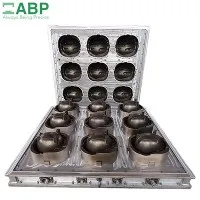
EPS ice cream sphere box mold is made by high-quality aluminum alloy. With standard steam chamber and standard cooling system. All the mould covered with T-Fluorine coating paint protection membrane to make the mould lubricative and can avoiding the products sticking to the mold.

Height Adjustable EPS Waffle Pod Mould
High quality Height changeable EPS/AIRPOP Waffle Pod mould for FANGYUAN machine export to New Zealand. All the mould covered with T-Fluorine coating paint protection membrane to make the mould lubricative and can avoiding the products sticking to the mold.

Full CNC process EPS special foam/Styrofoam 20L box mould for Hirsch machine export to Dominican. With standard steam chamber and standard cooling system. Convenient mold unloading. Good corrosion resistance.

Full CNC process High quality EPS expanded polystyrene pot package mould export to Kuwait. EPS pot package mould is made by high-quality aluminum alloy. 350 degree heat resistance and long life using.

Full CNC process EPS expander polystyrene Round Ice Box mould export to Kuwait. With standard steam chamber and standard cooling system. Convenient mold unloading. Good corrosion resistance.

Full CNC process EPS seed tray mould export to Kuwait. All the mould covered with T-Fluorine coating paint protection membrane to make the mould lubricative and can avoiding the products sticking to the mold.

EPS Television TV Package Mould
Full CNC process EPS back RT RC(Whirlpool) mould export to Mexico. EPS television TV package mould is made by high-quality aluminum alloy. 350 degree heat resistance and long life using.
EPS Washing Machine Package Mould
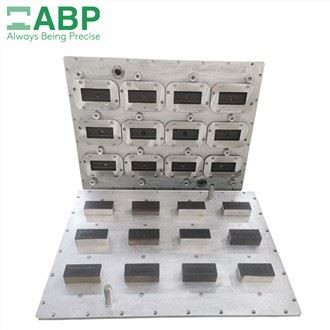
Full CNC process EPS Back LT RC (Whirlpool) mould export to Mexico. All the mould covered with T-Fluorine coating paint protection membrane to make the mould lubricative and can avoiding the products sticking to the mold.

Full CNC EPS air pop diamond pod mould for Building export to Australian. With standard steam chamber and standard cooling system. Convenient mold unloading. Good corrosion resistance.
What is EPS Ice Box Mould
The EPS ice box mold is a specialized tool used to create ice boxes made from Expanded Polystyrene (EPS) foam, a material known for its insulating properties. The mold is made of durable metal and has a hollow cavity in the shape of the desired ice box. These boxes are valued for their excellent insulation properties, which help maintain the temperature of the contents.
Benefits of EPS Ice Box Mould
The EPS ice box mold is usually made of durable and high-quality materials, such as aluminum or stainless steel. This ensures it can withstand the high pressures and temperatures involved in the production process. The mold is typically designed to produce different sizes and shapes of foam boxes, depending on the specific needs of the manufacturer.
The EPS insulation foam produced by these molds is known for its excellent insulation properties, making it ideal for use in the transportation and storage of cold goods. EPS foam boxes are lightweight, easy to handle, and can be used multiple times, making them a cost-effective solution for businesses that need to transport or store sensitive products over long distances.
In addition to their practical benefits, EPS ice box molds are also environmentally friendly. The foam boxes they produce are 100% recyclable, helping to reduce waste and preserve natural resources. The production process itself is energy-efficient, with minimal carbon emissions, making it an eco-friendly solution for businesses that want to reduce their environmental impact.
EPS ice box molds are non-toxic and safe for storing food and beverages. The material does not harbor bacteria or odors, ensuring that the contents remain clean and fresh. This makes EPS ice boxes suitable for use in the food and pharmaceutical industries, where hygiene and safety are paramount.
EPS foam beads are poured into the mold, which is then sealed and heated. The heat causes the beads to expand and fuse together, filling the mold cavity and forming a solid foam block in the shape of the ice box. Once cooled, the resulting foam block can be cut and shaped to create a functional ice box. The EPS ice box mold is an essential tool for those who require lightweight, durable, and cost-effective insulation solutions for their goods, especially in the food industry.

Can EPS Ice Box Mould be Customized for Different Sizes and Shapes?
EPS ice box mold is easy to use and can be tailored to create custom shapes and sizes based on specific needs. It is a valuable investment for businesses that rely on the cold chain to keep their products fresh and safe. The EPS ice box mold is widely used in a variety of applications, including transportation, storage, and shipping of temperature-sensitive items. It is easy to maintain and can be reused multiple times, making it a practical and sustainable solution for creating high-quality insulation products.
What Materials are EPS Ice Box Mould Made of?
EPS ice box mold frame made of high-quality aluminum material alloy, processed by CNC machines with precise size, teflon coating. EPS ice box are a perfect solution to keeping the perishable products or items at a constant temperature for easy transport.

How to Choose EPS Ice Box Mould
Cavity number
The number of cavities in the mold dictates the production capacity. Consider the desired production volume and choose a mold with an appropriate number of cavities to match your requirements. Balancing efficiency with mold complexity is essential.
Compatibility with production process
The chosen mold should align with your specific production process, whether it's for block molding, shape molding, or other applications. Ensure that the mold's dimensions, features, and functionality suit your manufacturing setup.
Mold material
The material used in the mold's construction directly affects its durability and longevity. High-quality molds are typically made from materials like aluminum or steel. These materials offer excellent heat conductivity, robustness, and resistance to wear and tear, ensuring a longer mold lifespan.
Mold design
The mold's design influences the final product's shape, texture, and details. Opt for molds that have precision in design, with smooth surfaces, accurate dimensions, and well-defined features. The design should also facilitate easy release of the molded EPS product.
Application of EPS Ice Box Mould
Cold chain logistic
EPS ice box molds play a vital role in cold chain logistics, ensuring that temperature-sensitive goods are transported efficiently and safely. Keeping ice cubes and crushed ice in a frozen state for an extended period, ideal for events, parties, and food service.
Beverage cooling
Chilling beverages such as sodas, water bottles, and canned drinks during outdoor activities, picnics, or gatherings. They are lightweight and portable, making them ideal for keeping drinks cold in outdoor environments, enhancing convenience and enjoyment.
Catering and events
Storing and transporting cold items like salads, desserts, and perishable goods for catering services. These ice boxes help maintain the quality and safety of the food and drinks being served.
Medical and pharmaceutical
Preserving the temperature of temperature-sensitive medical supplies and samples during transport. Their superior insulation ensures that these items remain at the required temperatures to maintain their efficacy and safety.
What are Some Common Problems When Using EPS Ice Box Mould?
Inconsistent mold filling
Uneven distribution of EPS beads during the mold filling process can lead to inconsistent wall thickness and weak spots in the ice box. Ensuring uniform filling is crucial for the structural integrity and insulation properties of the final product.
Poor fusion of EPS beads
If the EPS beads do not fuse properly during the molding process, the ice boxes can have weak seams or joints, compromising their durability and insulation. Proper control of steam and pressure is necessary to achieve complete fusion.
Mold Wear and Tear
Over time, molds can experience wear and tear, leading to defects in the ice boxes such as rough surfaces, incomplete shapes, or improper dimensions. Regular maintenance and timely replacement of worn parts are essential to maintain production quality.
Difficulty in demolding
Removing the finished ice boxes from the mold can be challenging if the mold design is not optimal. This can result in damage to the ice boxes or reduced production efficiency. Using release agents or optimizing mold design can help mitigate this issue.
Surface defects
Surface defects such as rough textures, dents, or air pockets can occur if the mold surface is not properly maintained or if there are issues with the EPS material. Ensuring smooth mold surfaces and using high-quality EPS beads can reduce surface defects.
Temperature control issues
Inconsistent temperature control during the molding process can affect the expansion and fusion of EPS beads, leading to defects in the ice boxes. Precise temperature management is crucial to ensure the proper formation and quality of the ice box.
Maintenance Tips for EPS Ice Box Mould
Basic maintenance before and after every cycle: Attentively looking for any dust, and debris before the cycle and especially after the cycle will prevent a lot. This will detect the issue in no time and not compromise with the standard of the cycle.
Clean mold cavities with a gentle solvent: Residue within the cavity can hamper the shape and size of the integral process. So, simple cleaning works a long way. With the gentle solvent, they will not affect the mechanism of the system.
Use compressed air to blow out the dust, debris, and water: For simpler EPS molds cleaning can be easy. But, for complex molds reaching out to the extreme interior can be a tough job. Moreover, this residue in the interior can lead to a severe issue in the system. So, using compressed air can blow out the dust, debris, and water.
Ensure the dryness of the mold: Keeping the molds dry before storage is a very crucial need. As the water in the EPS mold can lead to rust which can damage the entire mold. This can result in the production of destroyed products.
Check runners and all other parts of the mold: The EPS mold cavity is not the only area that needs to be checked. The other parts of the mold such as runners or sprues also need inspection as dust and debris can affect these too.
Check mold hardware and connectors: The inspection of the external parts such as bolts, plates, etc also needs to be carried out. This will look for wear, tightness, or other standard maintenance issues.
How to clean EPS Ice Box Mould
Cleaning EPS ice box molds is essential for maintaining their efficiency and longevity. The three primary methods include high-pressure water gun cleaning, dry ice cleaning, and chemical dipping.
High-pressure water gun cleaning utilizes a powerful stream of water to dislodge dirt and residues from the mold surface. It's effective for most contaminants and is relatively eco-friendly.
Dry ice cleaning involves blasting dry ice pellets with compressed air, which sublimate on impact, lifting off contaminants without leaving secondary waste. This method is non-abrasive and reaches into crevices effectively.
Chemical dipping entails immersing the mold in a solution with cleaning agents to dissolve contaminants. However, chemicals can be corrosive and pose environmental and safety risks.
Given the corrosive nature of chemicals, high-pressure water gun cleaning and dry ice cleaning are preferable. These methods offer effective cleaning without chemical damage or environmental harm. Proper maintenance ensures optimal mold performance and extends its lifespan, enhancing manufacturing efficiency.
FAQ
Hot Tags: eps ice box mould, China, suppliers, manufacturers, factory, customized
You Might Also Like


